Northern Italy Itinerary: Lakes, Venice, Milan and the Dolomites

Northern Italy Itinerary: Lakes, Venice, Milan and the Dolomites
There is a version of Italy that has nothing to do with Rome.
No Colosseum queues. No frantic dash between the Vatican and the Sistine Chapel. No gelato-fuelled argument about whether you should fit in Pompeii. The north of this country runs on a completely different rhythm — alpine light, ferry crossings, Prosecco hills, and the kind of mountain scenery that makes you forget you are technically still in the same country as the Amalfi Coast.
A well-paced northern Italy itinerary runs Milan to Venice (or the reverse) in a loose arc: the Italian Lakes, a run through the Dolomites, a stop in Verona, then Venice, with Bologna as an optional bonus at either end. Done in 10–14 days, it is one of the most satisfying self-contained Italy trips possible. You need roughly half your time with a rental car (the lakes and the Dolomites are not train country, not really), and the rest on fast trains between cities.
This is the right itinerary if you are returning to Italy after doing Rome and Florence, if you are a lakes-and-mountains traveller first and a history buff second, or if you simply want to experience northern European polish grafted onto unmistakably Italian food and light.
For general orientation before you start planning, the main Italy planning guide covers visas, money, and when to go. If you want to compare this route to the classic full-country sweep, the 2-week Italy itinerary and 10-day Italy itinerary are your reference points — this article deliberately ignores everything south of Bologna.
At a Glance: The Northern Loop
| Stop | Why Go | Recommended Nights |
|---|---|---|
| Milan | Gateway, Duomo, Last Supper, design culture | 2 |
| Lake Como | Bellagio, ferry network, mountain backdrop | 2 |
| Lake Maggiore (optional) | Borromean Islands, less crowded than Como | 1 |
| Bolzano / Dolomites base | Val Gardena or Cortina, hiking and passes | 2–3 |
| Verona | Arena, Romeo and Juliet, great food and wine | 1 |
| Venice & the Veneto | Canal city, Murano, day trip to Vicenza or Treviso | 3 |
| Bologna (optional) | Food capital, gateway to Emilia-Romagna | 1–2 |
Total: 12–14 nights. The 10-day version cuts Lake Maggiore and trims Venice to 2 nights.
Why Skip Rome on This Trip
The honest answer is: not because Rome is not worth it. It always is. But Rome is a full trip on its own. Pairing it with the north almost always means you are rushing both halves — you arrive jet-lagged into Rome, tear through the Forum, take a night train, and surface bleary in Milan having seen neither place properly.
The north has its own internal logic. Milan and Venice bookend the route with major airports and fast train links. Everything in between — the lakes, the Dolomites, Verona — hangs together geographically. You are never more than a few hours from the next stop by road or rail. That coherence is what makes a north-only trip so satisfying to plan and so comfortable to live.
It also gives you the freedom to slow down. Two nights on Lake Como feels like a genuine break. Three nights in the Dolomites allows a full-day hike without feeling guilty. That is a different kind of Italy trip, and for a lot of travellers, it is the better one.
If you want to compare routes side by side, the Italy itineraries hub has the full overview.
The Main Itinerary: 12 Days Milan to Venice
This is the recommended north Italy itinerary for first-time visitors to the region. It starts in Milan (easiest international entry point), moves west to the lakes, crosses into the Dolomites by car, then descends via Verona to Venice.
Days 1–2: Milan
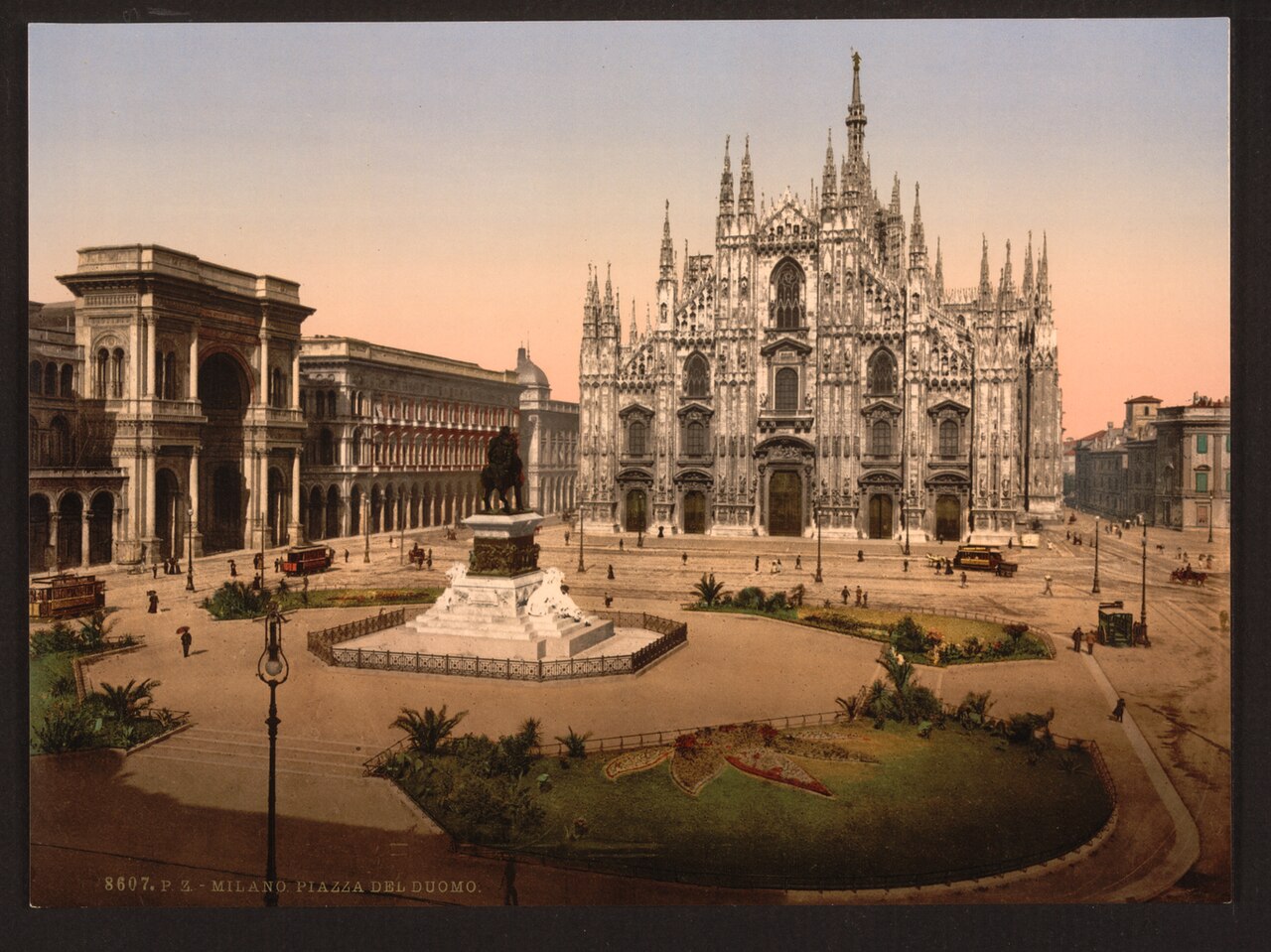
Fly into Malpensa or Linate and head directly into the city. Two days is the right number — enough for the Duomo, the Galleria Vittorio Emanuele II, Leonardo’s Last Supper (book this as far ahead as you can, ideally weeks in advance through the official Cenacolo Vinciano site), Brera neighbourhood, and the Navigli canals at aperitivo hour. Milan is not a slow-walkers’ city; it rewards people who move through it with purpose.
If your flight lands early on Day 1, use the afternoon for the cathedral and a walk up to the rooftop. Day 2: Last Supper in the morning (the appointment slot sets the clock), Pinacoteca di Brera in the afternoon, Navigli in the evening. Day 3 is your travel day west.
For a deeper dive, the Milan and northern Italy guide has neighbourhood-by-neighbourhood detail.
Day 3: Milan to Lake Como
Pick up your rental car at Milano Centrale or the airport on the morning of Day 3 and drive north — it is around an hour to Como, less to Varenna if you go via the SS36 along the eastern shore. I prefer arriving into Varenna or Bellagio rather than the town of Como itself; you are immediately on the lake, rather than in the busy gateway town.
The ferry network on Lake Como is excellent and cheap. Buy a day pass, pick a landing, and roam. Bellagio is worth the crowds. Varenna is worth two hours on foot. Menaggio is quieter and a good base. If you have the car, drive the western shore road north toward Gravedona for the views and the absence of tourist coaches.
The Italian Lakes travel guide covers ferry routes, villages, and the debate between Como and Maggiore in real depth.
Day 4: Lake Como (Full Day)
Stay put. This is a rare instruction in Italy itineraries, and it is the right one. Lake Como is not a half-day destination. Take the ferry to a village you did not visit the day before, walk the Greenway del Lago trail between Colonno and Sala Comacina, eat lunch on a terrace, come back slowly. If you are travelling in summer, wake early — the mid-morning crowds on the main ferries are thick.
Day 5: Lake Como to Bolzano (Dolomites Gateway)
The drive from Lake Como to Bolzano takes around 2.5–3 hours via the A22 Brenner motorway, or longer if you take the prettier route through Bergamo and Brescia. This is the day to pick your Dolomites strategy.
Bolzano is the best base if you want a city-hotel with easy access to the mountains. It is a genuinely fascinating place — half Italian, half Austrian, all very good at food — and the cable car up to the Renon plateau leaves from the city centre. The South Tyrol Museum of Archaeology here houses Ötzi the Iceman, which is unexpectedly riveting.
From Bolzano you can day-trip into Val Gardena (Ortisei, Selva) in around 40 minutes, or push deeper on Day 6.
Alternatively, if you want to stay in the mountains themselves, base in Ortisei (Val Gardena) or Corvara (Alta Badia). The tradeoff is that evenings in mountain villages are quiet and early, and you will feel the altitude if you have been at lake level.
Days 6–7: The Dolomites
Two days is the minimum to feel the Dolomites rather than just photograph them. Three days is better, and the 3-week Italy itinerary shows how to work the mountains into a longer trip.
Day 6: Drive the Sella Ronda loop — a circuit of four mountain passes (Pordoi, Sella, Gardena, Campolongo) that is absolutely manageable by car in a morning, leaving the afternoon for a hike. The road closes in winter but is fully open from roughly late May through October. Stop at the top of Passo Pordoi for the views and a coffee at the rifugio.
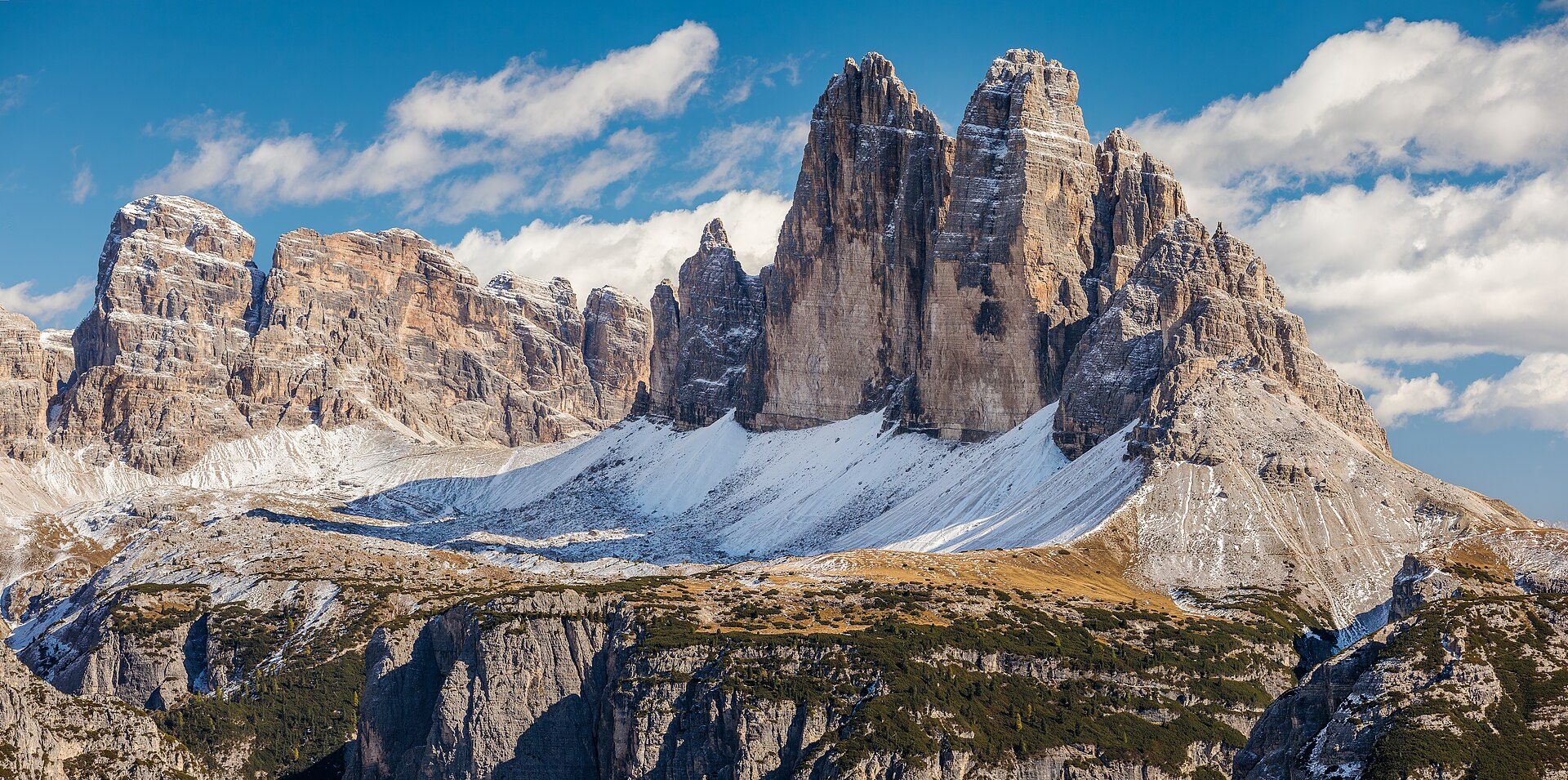
Day 7: Tre Cime di Lavaredo. This requires commitment — drive from Bolzano or Ortisei toward Cortina d’Ampezzo, then up the toll road to the Auronzo rifugio car park (arrive before 9am in summer to avoid the car park queue, or take the shuttle bus from Misurina). The loop trail around the Tre Cime takes 2–3 hours at a relaxed pace and is one of the best walks in the Alps. In the afternoon, descend to Cortina and drive toward Verona — it is about 2.5 hours.
If the Tre Cime feels too ambitious, the Alpe di Siusi (Seiser Alm) is a wide plateau above Ortisei with cable car access and gentler walking. It is genuinely stunning and a better choice for mixed-ability groups.
Car note: The Dolomites are extremely difficult to see well without a car. Some buses run between towns (and as of 2026, many require advance booking in peak season, especially bus 444 to Tre Cime and bus 442 to Lago di Braies), but the passes and rifugios are not reachable by scheduled transit. If you do not want to drive the whole itinerary, pick up a car in Bolzano and drop it in Verona — this keeps the city sections car-free and gives you full freedom in the mountains.
Day 8: Verona
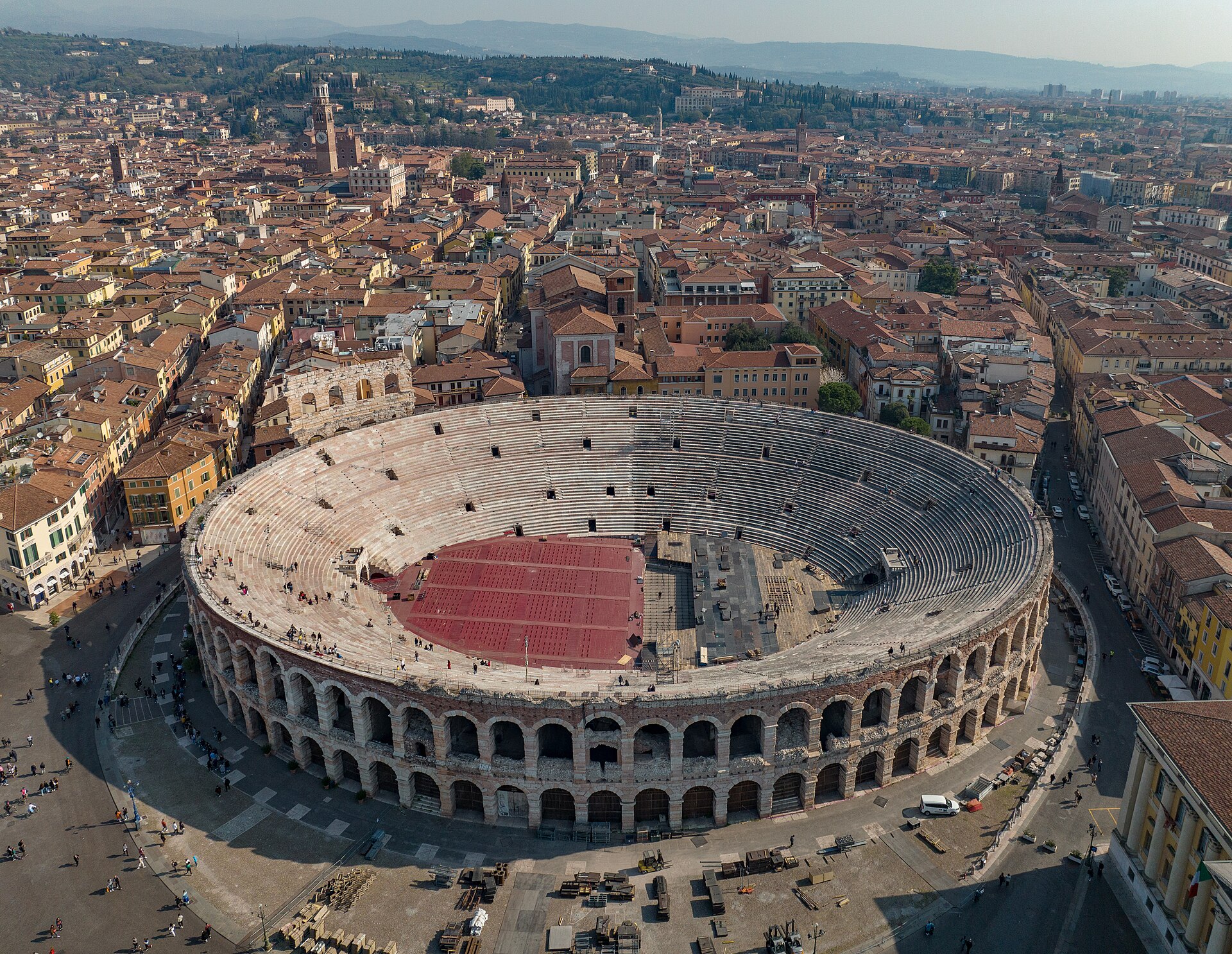
Verona is a half-day city that deserves a full day. The Arena is one of the best-preserved Roman amphitheatres in the world, and the summer opera season (around June–September) turns it into something genuinely memorable at night. Book a performance if you can — the experience of sitting in a 2,000-year-old stone oval as Aida plays out is hard to replicate.
Beyond the Arena: the Piazza delle Erbe, the Arche Scaligere (Scaligeri tombs), the Castelvecchio, and the supposed balcony of Juliet — which is fictional, but photogenic. Verona also marks the start of serious wine country: Amarone, Valpolicella, and Soave vineyards begin just east of the city.
Drop the rental car here if you followed the Bolzano pick-up strategy. Verona Porta Nuova station has direct, frequent trains to Venice (70 minutes on the fast service).
Days 9–11: Venice
Three nights is the right number for Venice. Two nights means you are always rushing; four means you have run out of main-list things to do and are wandering in circles, which is fine, but plan for it.
Day 9: Arrive mid-afternoon, find your hotel (water taxi from Santa Lucia station if you want a dramatic entrance), walk to the Rialto before dinner. Do not do a lot of planning today. Just walk.
Day 10: Piazza San Marco and the Basilica first thing — before 9am if possible, when the piazza has some room to breathe. Doge’s Palace. Afternoon: Dorsoduro sestiere, the Accademia gallery, the Zattere waterfront. Evening: eat somewhere in Cannaregio, which is where the city’s actual residents eat.
Day 11: Take the vaporetto to Murano in the morning (45 minutes from Fondamente Nove, Line 12). Watch a glass-blowing demonstration, buy one thing you actually love. Back by early afternoon. Use the rest of the day for Burano if you have energy, or to revisit whatever corner of Venice pulled at you.
The full picture — vaporetto routes, sestiere breakdown, day trips to Vicenza and Treviso — is in the Venice and Veneto travel guide.
Day 12: Venice to Home
Venice Marco Polo airport handles most international departures. Allow more time than you think: the boat or bus transfer from Venice to the airport takes 20–45 minutes depending on mode and traffic, and the airport is small enough to get busy in summer. If you are flying home via another Italian hub, the fast train from Santa Lucia to Milano Centrale runs in around 2 hours 20 minutes.
Variation 1: Lakes and Dolomites Focus (10 Days)
For travellers who want to go deep into nature and are happy to skip or shorten the cities.
- Days 1–2: Fly into Milan, one night. Head straight to the lakes on Day 2.
- Days 3–5: Lake Como (2 nights) + Lake Maggiore (1 night). The Borromean Islands on Lake Maggiore are among the most striking things in northern Italy — Isola Bella in particular, with its Baroque palazzo and terraced gardens, is surreal and worth the ferry crossing.
- Days 6–8: Three full nights in the Dolomites — base in Ortisei or Cortina. Do the Sella Ronda, Tre Cime, Alpe di Siusi, and one rifugio lunch. Take your time.
- Days 9–10: Descend to Verona (1 night), fast train to Venice, one night, fly home.
This version works best with a car throughout. The lakes are manageable without one (ferries and local buses cover the main villages), but combining lakes and Dolomites efficiently without a car is very hard.
For detailed logistics on both lake regions, the guide to the Italian Lakes and the Dolomites and Alps travel guide are essential reading.
Variation 2: Cities Focus — Milan, Verona, Venice, Bologna (10 Days, No Car Needed)
This is the train-lover’s version of a north Italy itinerary. No rental car, no mountain passes, no ferry logistics — just Italy’s high-speed rail network and some of the best urban food in the world.
- Days 1–2: Milan. The essentials: Duomo, Last Supper (book first), Navigli.
- Days 3–4: Turin (2 hours by fast train). Often left off northern Italy itineraries to their detriment. The Egyptian Museum is the second-largest collection of Egyptian antiquities in the world. The Mole Antonelliana is the city’s defining skyline piece. Piedmont truffles and Barolo wine are a legitimate reason to make this detour.
- Days 5–6: Verona (2 hours from Turin via Milan). See the Arena, eat well, do a half-day Valpolicella wine tour.
- Days 7–8: Venice (70 minutes from Verona). Two focused nights.
- Days 9–10: Bologna (fast train from Venice, around 1h 40m). Two days in the food capital: the porticoes (a UNESCO World Heritage Site), Piazza Maggiore, the Torre degli Asinelli, and as much tagliatelle al ragù and mortadella as you can reasonably manage.
The entire route is on Trenitalia and Italo fast trains. You can book all of it on the Italy transportation page or through the national rail sites. Fares are significantly cheaper when booked in advance.
This version also connects naturally to a Tuscany extension if you want to add Florence: Bologna to Florence by fast train takes 37 minutes.
Variation 3: Food and Wine — Emilia-Romagna Gateway (12 Days)
This is the version for the traveller who reads menus as carefully as walking tours.
Emilia-Romagna is not northern Italy in the alpine sense — it sits below the Po plain — but it is the region that taught the rest of Italy how to eat. Bologna (tagliatelle, ragù, mortadella), Parma (prosciutto, Parmigiano Reggiano), Modena (balsamic vinegar, Lambrusco, Ferrari): these are the three cities of the Italian larder, and they are comfortably connected by train in a single morning.
- Days 1–2: Bologna — arrive and settle. Torre degli Asinelli at golden hour. Mercato di Mezzo. Dinner at a trattoria in the student quarter.
- Day 3: Day trip to Modena (30 minutes by train). The Duomo (UNESCO) and the Piazza Grande are both world-class. Find an acetaia for a balsamic vinegar tasting — the traditional aceto balsamico tradizionale (DOP) is aged 12–25 years and has nothing to do with the supermarket version.
- Day 4: Day trip to Parma (1 hour from Bologna). Visit a Parmigiano Reggiano dairy and a prosciutto-curing facility if you can book in advance. The Battistero in Parma is one of Italy’s finest Romanesque buildings and consistently overlooked.
- Days 5–7: Drive north to Milan for 1 night, then west to Lake Maggiore (2 nights). Stresa is the most accessible base; take the ferry to Isola Bella and Isola dei Pescatori.
- Days 8–10: Dolomites (3 nights, Ortisei or Bolzano base).
- Days 11–12: Verona (1 night), Venice (1 night, for the departure).
This itinerary works best if you rent a car from Day 5 onward and return it in Verona. Bologna and the Emilia-Romagna section are very well served by train.
Practical Logistics: Car vs. Train in the North
The single most important planning decision for a northern Italy trip is when to drive and when to take the train. Get this wrong and you will either be navigating Italian rush-hour traffic into city centres (do not do this), or stranded on a mountain bus schedule that runs twice a day.
Here is the short version:
Take the train for: Milan, Verona, Venice, Bologna, Turin. These are well-connected by frequent, fast, affordable services. Trenitalia and Italo both run the main intercity routes. The Italy route done entirely by train goes deep on booking, passes, and what to know.
Rent a car for: The Italian Lakes and the Dolomites. Full stop. The lake villages are technically reachable by bus and ferry, but if you want to drive the western shore of Como at dusk or get to a Dolomites pass before the crowds, you need a car.
The smart rental strategy: Pick up the car at Bolzano Bozen airport or at Verona Porta Nuova station after arriving by train from Milan. Return it in Verona before taking the train to Venice. This keeps Milan and Venice car-free (parking in both is expensive, stressful, and unnecessary) while giving you full flexibility in the mountains and on the lakes if you drive Como before picking up in Bolzano.
Alternatively, rent from Milan Malpensa airport on Day 1 (car rates at airports are usually competitive) and drive the whole loop, returning to Venice Marco Polo. Most rental companies allow cross-city drop-offs, though this sometimes carries a fee — check before booking.
Driving notes (as of 2026):
– Italian motorways (autostrade) require a payment at toll booths — have a credit card ready.
– ZTL zones (Zona a Traffico Limitato) restrict cars in historic city centres. Do not drive into Venice, Milan centre, Verona’s old town, or Bologna’s historic core without checking ZTL rules. Fines arrive in the post weeks later and are not small.
– The Dolomites passes (Pordoi, Sella, Gardena, Campolongo) are generally open June–October. Check conditions on the official Alto Adige road service site before heading up in May or late October.
Final Thoughts
The north is the Italy that most people discover on their second trip, and almost everyone says the same thing after: they wish they had come sooner. The lakes are calmer than the coast. The Dolomites are more dramatic than Tuscany’s hills. The cities — Milan, Verona, Bologna — are world-class without the queues.
A well-planned northern Italy itinerary asks something of you: a car for the mountain and lake sections, some advance booking for the Last Supper and Dolomites buses, a willingness to move between the urban and the wild within a few days’ drive. In return, it gives you the full range of what this country can do — not just the headline Italy, but the layered, surprising, genuinely beautiful one above the Po plain.
Start in Milan. End in Venice. Everything in between is the good part.
For the full range of Italy routes and planning tools, start at the Italy itineraries page.
Questions travellers ask
How many days do you need for a northern Italy itinerary?
Ten days is the minimum for a satisfying northern Italy trip covering the main stops — Milan, Lake Como, the Dolomites, Verona, and Venice. Twelve to fourteen days is better, allowing you to slow down, add Lake Maggiore or Emilia-Romagna, and not feel like you are sprinting between train platforms. Anything under ten days forces hard choices about which regions to skip entirely.
Do you need a car for a northern Italy itinerary?
It depends on what you want to see. Milan, Verona, Venice, and Bologna are all excellent by train. The Italian Lakes and the Dolomites are both significantly better with a car — not impossible without one, but you will miss the flexibility that makes these regions so rewarding. The practical middle ground is to take trains between cities and rent a car specifically for the lakes-and-mountains section, picking up in Bolzano or Verona and returning before Venice.
What is the best time to visit northern Italy?
Late spring (May–June) and early autumn (September–October) are the sweet spots. The Dolomites trails and cable cars typically open from late May and are fully operational through September. Lake Como peaks for beauty in late May when the azaleas are still out and the crowds are manageable. July and August are hot, busy, and expensive — beautiful, but you will share the Bellagio waterfront with a significant portion of continental Europe. For detailed seasonal advice, the best time to visit Italy page covers the full picture.
Can you do northern Italy without visiting Rome?
Absolutely, and for many travellers this is the right call. Rome is a world-class destination but it belongs to a different kind of Italy trip — ancient, grand, and intense. Northern Italy runs on a cooler register: mountain air, lake ferries, medieval city squares, and food that reflects Central European influence as much as Mediterranean. If you have already done Rome, a north-only loop is a natural second trip. If Rome is not on your radar, northern Italy is complete on its own terms.
Is Venice worth including in a northern Italy itinerary?
Yes, with a caveat: Venice is not a city you want to do in a day trip or a single rushed night. Three nights allows you to see the main sights, visit Murano, and actually feel what the city is — which is unlike anywhere else on earth. Venice is also the most natural end-point of the Milan-Lakes-Dolomites loop, sitting at the eastern edge of the route with good international flight connections.
How do you get from the Dolomites to Venice?
By car, the drive from Cortina d’Ampezzo to Venice takes about 2 hours, and from Bolzano about 2.5 hours via the A22 and A4 motorways. If you are not driving, take the train from Bolzano to Verona (1.5 hours) and then from Verona to Venice (70 minutes) — all on fast, bookable services. Cortina has limited direct transit connections, which is another reason the Dolomites work better with a car.
What is the best base for the Dolomites?
It depends on what you want to do. Bolzano is the most practical base — it is a real city with good hotels, restaurants, and a train station — but you need to drive 40–60 minutes to reach the main valleys. Ortisei (Val Gardena) puts you right in the mountains, with cable cars from the town itself. Cortina d’Ampezzo is the most glamorous option, with easy access to Tre Cime and Lago di Braies, but it is also the most expensive. For hikers who want to maximise time on trails, Ortisei or Corvara (Alta Badia) are the best choices.
How does northern Italy compare to a classic Italy itinerary?
The classic 2-week Italy itinerary covers Rome, Florence, the Amalfi Coast, and Venice — the greatest hits of a country that has too many greatest hits. Northern Italy swaps the Roman history and the sun-baked south for a different texture: Alps, lakes, medieval towns, and a food culture rooted in butter and wine rather than olive oil and tomatoes. Neither is better; they are different countries, almost. The north rewards travellers who want to slow down in landscape rather than hurry through monuments.